GVS Agrar

From a customized ERP solution to a future-proof industry solution
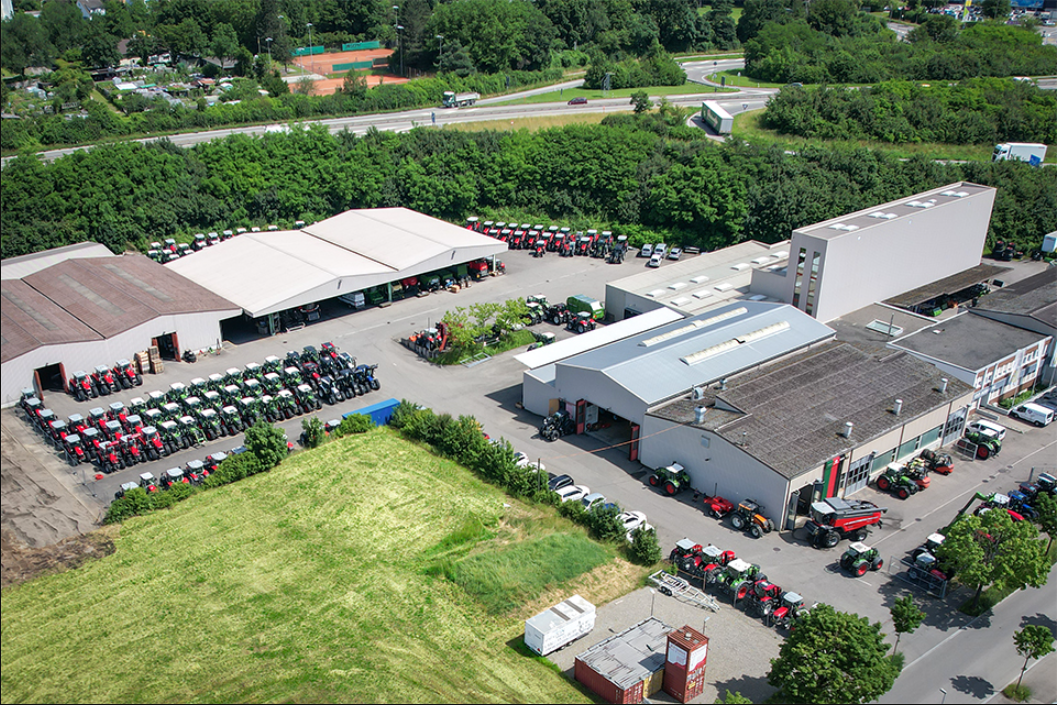
GVS Agrar AG is part of the GVS Agrar Group, which comprises a total of nine subsidiaries, including Agrar Landtechnik AG. With around 500 employees across Switzerland and France and a nationwide dealer network of 270 distribution partners, customer proximity is not just a promise, but a core part of daily business.
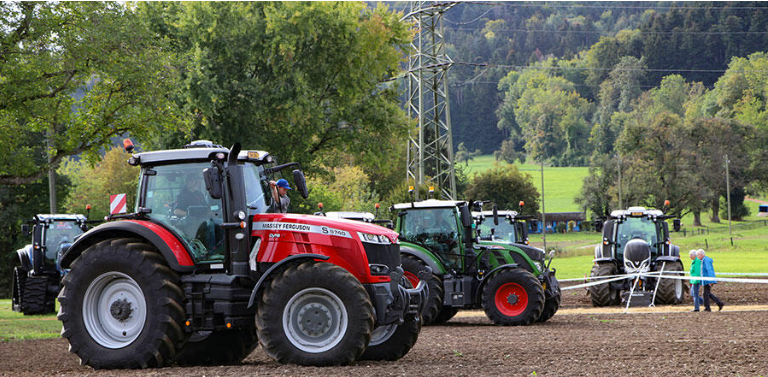
As the general importer of renowned brands such as Fendt, Massey Ferguson and Valtra, GVS carries significant responsibility in the agricultural machinery industry. Processes must run seamlessly across locations, service cases must be handled quickly and efficiently and a complete overview of machines, spare parts and service histories must be available at all times.
In the demanding field of agricultural machinery trade, the existing ERP system increasingly became a limiting factor.
DMS 365 Rental 365 Mobile Service 365 MaschinenParkOnline
From a customized ERP solution to a future-proof industry solution

"Our field is the future and our system landscape must reflect that."

Sina Angst
Project Manager ERP, GVS Agrar AG

The Starting Point

A system that became riskier with every update

For many years, GVS Agrar relied on a heavily customized ERP system from a small Swiss provider, a solution that was continuously tailored over time for every business unit, every special requirement and every exception. What initially seemed flexible gradually became a burden.
“Our previous software solution was not keeping pace with the future. Individual customizations repeatedly caused us problems.”
The problem? Updates had to be prepared like standalone projects. With every customization, uncertainty grew, and with every uncertainty, the system became more unstable. Updates became a risk. Critical individual knowledge was lost when employees left the company. Over time, it became increasingly unclear what was standard and what was a custom solution. Adopting new technologies was no longer an option.
In the agricultural machinery industry in particular, essential industry specific functionality was missing. Service orders could not be properly linked to machines, workshop processes could only be mapped to a limited extent and service histories had to be compiled manually.
“If we want to grow and remain ready for the future, we need a system that evolves with us. We realized that we could not continue like this.”
Is your system ready for the future? Shape Your Future Today

Pain points at a glance

What were the core problems?

Overgrown ERP structures are slowing down the business

A heavily customized system that has evolved over many years creates complexity instead of efficiency and is increasingly becoming an obstacle to further growth.

Every update becomes a risk

When customizations are too deeply embedded in the system, updates become time-consuming, expensive, and difficult to predict.

Knowledge lives in people, not in the system

When experienced employees leave the company, critical process and system knowledge often leaves with them.

Legacy technology limits new opportunities

Modern requirements such as scalability, innovation, and future technologies are difficult to realize with outdated systems.

Industry-specific processes are not mapped in enough depth

Service, workshop operations, and machine history require specialized functionality that standard solutions often do not provide at the necessary level of detail.

Lack of transparency costs valuable time in service

When relevant information is not centrally available, search effort, coordination needs, and response times all increase.

Too many manual steps in day-to-day operations

Isolated solutions, Excel spreadsheets, and disconnected processes make workflows unnecessarily slow and error-prone.

Complex interfaces increase vulnerability

The more closely systems are interconnected, the more important stable integrations and a reliable technical foundation become.

High complexity makes onboarding more difficult

Unclear custom logic and non-intuitive workflows extend onboarding time and increase the error rate.

The Decision and Implementation

For GVS Agrar, three factors were decisive:

  • 1. Industry-specific ERP solution and knowledge

    Service orders, machine histories at serial number level, rent, used machinery platform and more. Functions that are precisely tailored to the agricultural machinery industry.

  • 2. Built for the Technology of Tomorrow

    By implementing TRASER DMS 365 based on Microsoft Dynamics 365 Business Central, GVS Agrar laid the foundation for long term technological innovation with continuous development, regular cloud updates and the integration of new technologies such as AI.

  • 3. Collaboration on equal terms

    “What we really value is the transparent communication and the availability of our contacts. We communicate on equal terms. That makes a huge difference in projects like this.”

  • Industry-specific. Future-proof. Partnership-based. Let’s get started together

    The Decision and Implementation

    industry-tailored, future-proof, collaborative

    The migration was the decisive moment. Numerous interfaces, the web shop, logistics partners and manufacturers had to work seamlessly from day one. And they did.
    “It was a surprisingly smooth go live. That was only possible because preparation, testing and coordination between the two teams worked hand in hand.”
    What made the difference for GVS Agrar was not just the software but the way the teams worked together.

    From the very beginning, there was open dialogue, processes were challenged and priorities were defined together. Challenges were approached with a clear focus on solutions. Especially in a complex system landscape with many interfaces, it is crucial to have a partner who not only implements but also thinks ahead.

    “We were able to address topics openly even when things became difficult. That builds trust. And that is exactly the kind of trust you need in an ERP project like this.”

    Sina Angst
    Project Manager ERP, GVS Agrar AG

    Results and Conclusion

    True service transparency and greater efficiency in daily operations

    Before the migration, a service case meant one thing above all: searching for information, clarifying questions and checking service histories. What work had already been carried out on this machine? Which parts had been installed? Were there any warranty claims?
    Today, every service order is linked directly to the serial number in TRASER DMS 365. Spare parts, working hours, previous service jobs, all of this information is fully traceable and clearly documented in the system.
    The result is fewer queries and faster coordination, both internally and externally. Old documents, Excel lists and different system views are now a thing of the past.
    Learn more about our TRASER DMS 365 Go to the product overview

    Results and Conclusion

    Stability in Daily Operations

    Technical interfaces to the web shop, manufacturers and logistics partners now run smoothly. With 500 employees across multiple locations, this makes a huge difference in daily operations.

    Regarding rent, TRASER Rental 365 provides significant operational relief. Rent objects can now be managed in a structured way, availability is fully transparent and invoicing is clearly traceable. Processes that were previously handled manually are now system driven and standardized.

    Technical operations have also stabilized. Interfaces to the web shop, manufacturers and logistics partners run smoothly and performance issues and table locks are now a thing of the past.

    The result is fewer interruptions, fewer workarounds and more time to focus on the day to day business.

    MaschinenParkOnline (MPO) also supports a group wide overview of used machines. Sales and dispatch teams can now access inventory information faster, without lengthy coordination.

    In the workshop, the next step is already underway with TRASER Mobile Service 365. Service reports are recorded directly on site, working hours are booked immediately and double data entry in the office is no longer necessary. Digitizing field service will further reduce administrative effort and create additional time savings.

    Results and Conclusion

    High Acceptance Within the Team

    The modern user interface makes it easier to onboard new employees. At the same time, the clear focus on standard processes reduces dependency on individual knowledge and prevents the build up of custom solutions that are difficult to maintain.
  • For GVS Agrar, the difference in daily operations is clearly noticeable today:

    Significantly more stable interfaces

    No more table locks

    Noticeably improved performance

    Modern, intuitive user interface

    Clean service histories for each machine

    Transparent management of rent objects and used machines

    A clear overall view of all processes

  • For GVS Agrar, TRASER Software was not just a solution provider but a true project partner. A partner who listens, thinks ahead and takes responsibility from the first meeting through to the software migration.

    “And that is exactly why the decision feels right. Not because everything is dramatically different, but because TRASER Software understands the specific requirements of the agricultural and construction machinery industry and enables us to focus on the day to day business.”

    Sina Angst
    Project Manager ERP, GVS Agrar AG

    Endless possibilities!

    Would you like to know what we can do for you and which product modules are best suited to your requirements? That’s our job!
    Take advantage of our industry knowledge and project experience and arrange a non-binding first consultation and, if you’re interested, take the next digital step with us. We are happy to assist you!